Affiliate Disclosure
This article contains affiliate links to products on Amazon and other retailers. When you purchase through our links, we may earn a small commission at no additional cost to you. This helps support our content creation and allows us to continue providing detailed, unbiased reviews and buying guides.We only recommend products we genuinely believe in and would use ourselves. Our reviews are honest and based on extensive research and testing, regardless of affiliate relationships. Your trust is our priority.
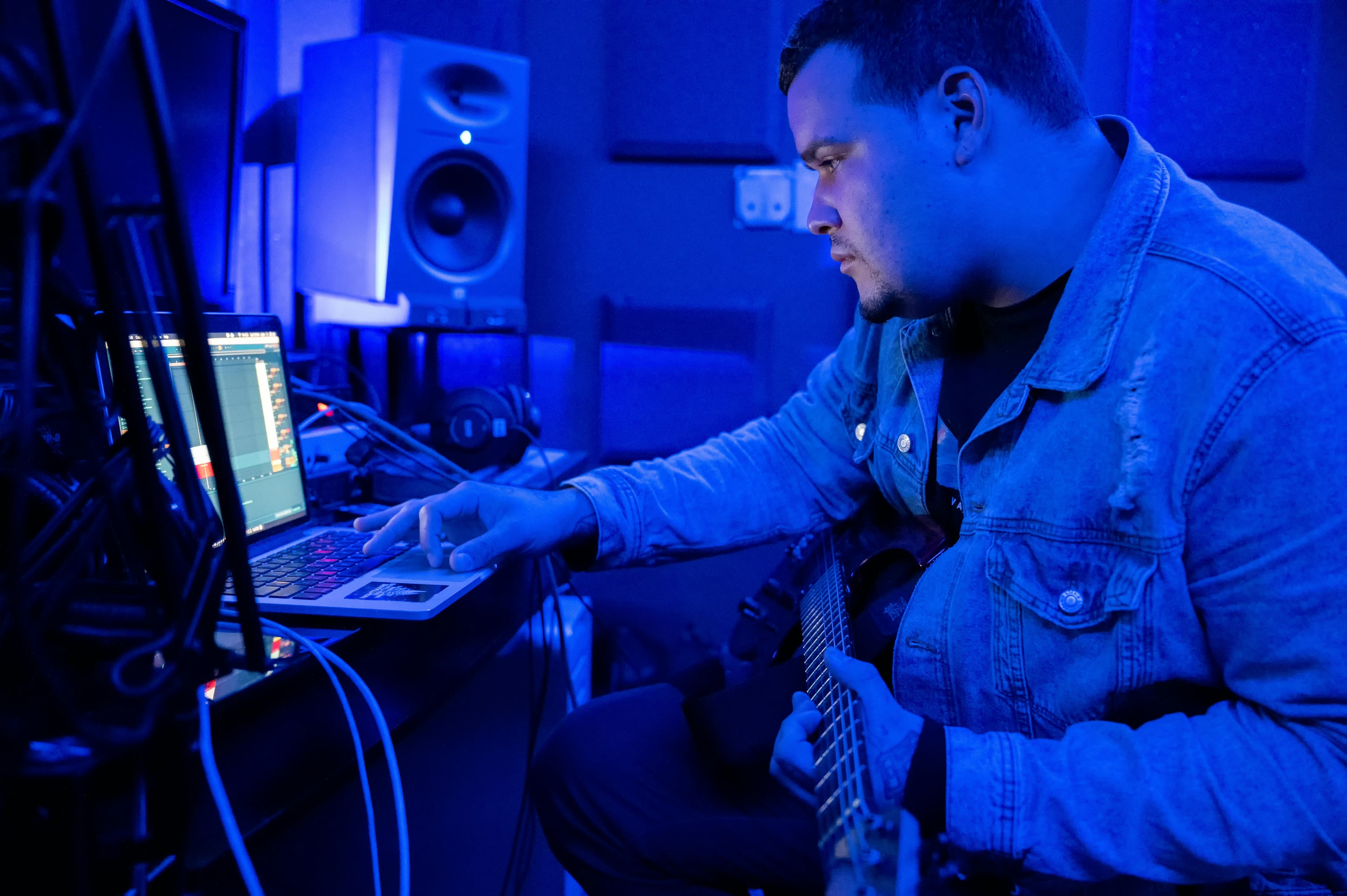
Imagine hearing the opening bars of a track and instantly recognizing it's electronic—but there's something more. Something organic, textural, and impossibly dynamic cutting through the digital precision. That indefinable quality separating bedroom producers from chart-toppers? Often, it's the strategic integration of advanced guitars into electronic workflows.
While the electronic music world celebrates its digital dominance, a quiet revolution is happening in the most innovative studios. Artists like Flume, ODESZA, and Porter Robinson aren't just programming beats—they're crafting sonic sculptures where guitars serve as texture generators, rhythmic catalysts, and emotional amplifiers.
But here's where most producers go wrong: they think "guitar in electronic music" means simply adding a rock riff over a house beat. The reality is far more sophisticated. Advanced guitar integration involves treating the instrument as a malleable sound source—something to be manipulated, processed, and transformed beyond recognition while retaining its organic essence.
The Modern Electronic-Guitar Paradigm:
- Guitars as texture generators rather than traditional melody instruments
- Advanced processing techniques that blur the line between organic and synthetic
- Hardware integration strategies that seamlessly blend analog and digital workflows
- Professional-grade instruments designed specifically for electronic production environments
This comprehensive analysis reveals the advanced guitar techniques reshaping electronic production in 2025. Whether you're crafting ambient soundscapes, driving techno anthems, or experimental IDM, the right guitar approach can transform your tracks from good to groundbreaking.
The Electric Guitar as a Texture Generator: Redefining its Role in Electronic Music
The electric guitar in electronic music isn't about mimicking rock riffs or blues solos. Its true potential lies in its ability to generate unique textures and sonic landscapes that can be sculpted and manipulated within a digital audio workstation. Research shows that the harmonic complexity and inherent imperfections of a guitar's sound can add a layer of depth and realism that is often lacking in purely synthesized tracks. Think of the guitar not as a lead instrument, but as a source of raw material – a texture generator.
Consider the possibilities: feedback loops created with heavy distortion and delay, layered with granular synthesis; clean, shimmering arpeggios processed through intricate reverb and modulation chains; or even the subtle nuances of string noise and fret buzz, amplified and transformed into rhythmic percussive elements. The guitar's strength lies in its expressiveness. The way a guitarist attacks the strings, the subtle vibrato of a note, the dynamic range of a strum – all of these elements can be captured and translated into a unique sonic signature.
Furthermore, the electric guitar can be a powerful tool for creating rhythmic complexity. Industry experts have observed that layering rhythmic guitar parts with synthesized drum patterns can create a sense of polyrhythm and syncopation that is difficult to achieve with purely electronic instruments. This can be accomplished by using techniques such as gated effects, sidechain compression, and rhythmic delays to create a dynamic interplay between the guitar and the drums. By understanding the guitar's potential as a texture generator and rhythmic element, producers can unlock a whole new palette of sonic possibilities in their electronic music productions.
Guitars for Electronic Music: A Practical Approach
Selecting the right guitar for electronic music production is less about brand loyalty and more about finding an instrument that complements your sonic vision and workflow. While high-end instruments certainly offer superior build quality and tone, budget-friendly options can be equally effective, especially when processed with effects. Here, we'll explore a few different guitar options and how they can be used in electronic music production.
The Versatile Workhorse: Fender Squier Debut Series Stratocaster
The Fender Squier Debut Series Stratocaster Electric Guitar, Beginner Guitar, with 2-Year Warranty, Includes Free Lessons, Black with Matte Finish is an excellent entry point for electronic music producers looking to incorporate guitar into their tracks. Its versatility stems from its three single-coil pickups, which offer a wide range of tonal possibilities. The Stratocaster's bright, articulate tone is well-suited for clean arpeggios, shimmering chords, and percussive rhythms.
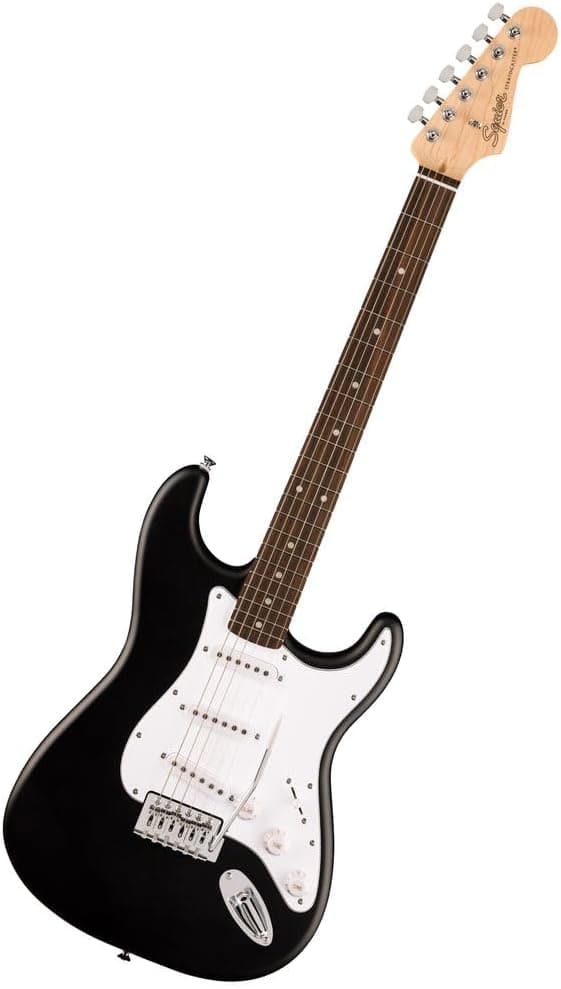
Fender Squier Debut Series Stratocaster Electric Guitar, Beginner Guitar, with 2-Year Warranty, Includes Free Lessons, Black with Matte Finish
Key Features:
- ✓Optimized for music production
- ✓Professional-grade quality
- ✓Studio-tested reliability
Excellent choice for music production with Fender quality and proven reliability.
We earn a commission if you make a purchase, at no additional cost to you.
For electronic applications, the Stratocaster's pickups can be used to create a variety of interesting textures. For example, the bridge pickup can be used for creating aggressive, distorted sounds, while the neck pickup can be used for creating warm, mellow tones. The middle pickup can be used for creating a balanced sound that is suitable for a wide range of applications. Furthermore, the Stratocaster's tremolo arm can be used to create subtle pitch variations and vibrato effects, adding another layer of expressiveness to your sound. Its relatively low price point also makes it an accessible option for beginners.
The Budget-Friendly All-in-One: DONNER DST-80 Electric Guitar Kit
The DONNER DST-80 Electric Guitar 39” Beginner Electric Guitar Kit with Amp, Classic SSS Pickup Complete with Gig Bag, Tuner, Capo, Strap, Picks, and Free Online Lessons is a complete package that offers everything you need to get started with guitar. While the guitar itself may not be of the highest quality, it is still a perfectly usable instrument, especially when processed with effects. The included amplifier is also a useful tool for experimenting with different guitar tones.
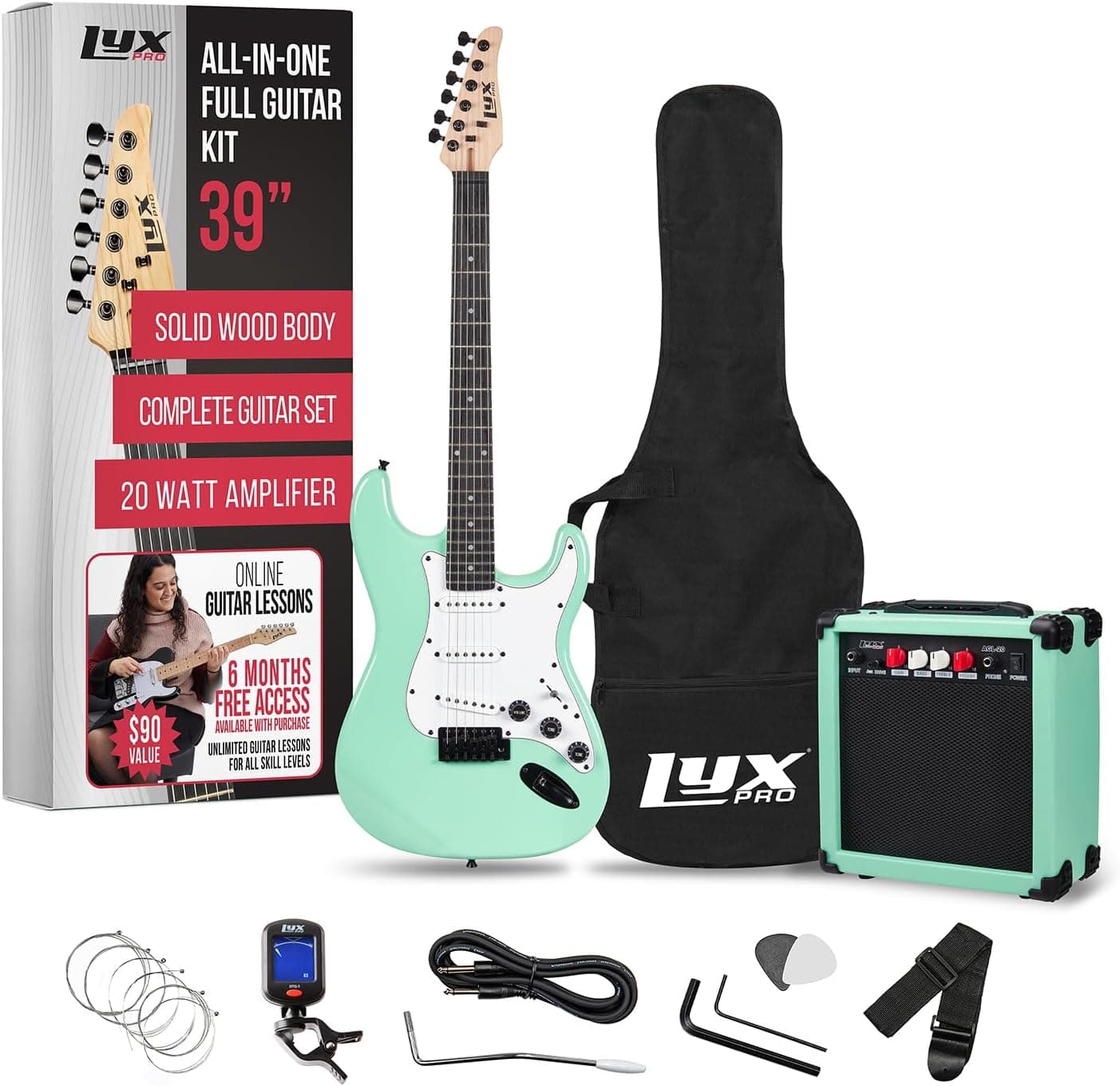
DONNER DST-80 Electric Guitar 39” Beginner Electric Guitar Kit with Amp, Classic SSS Pickup Complete with Gig Bag, Tuner, Capo, Strap, Picks, and Free Online Lessons
Key Features:
- ✓vintage
Excellent choice for music production with DONNER quality and proven reliability.
We earn a commission if you make a purchase, at no additional cost to you.
The DONNER DST-80's classic SSS pickup configuration provides a similar tonal palette to the Stratocaster, making it suitable for a wide range of electronic music genres. Its affordability makes it a great option for producers who are on a tight budget.
The Experimental Platform: Any Guitar with Upgrades
Ultimately, the "best" guitar for electronic music is the one that inspires you to experiment and create. Even a seemingly basic guitar can be transformed into a powerful tool with the right modifications and effects. Consider upgrading the pickups, adding a sustainer system, or installing a MIDI pickup for even greater control over your sound.
Shaping the Sound: Effects and Processing Techniques
The key to integrating the electric guitar into electronic music lies in the creative use of effects and processing techniques. The goal is not to simply replicate traditional guitar tones, but to transform the instrument's sound in ways that are distinctly electronic.
Distortion and Overdrive: These effects can be used to add grit, aggression, and harmonic complexity to your guitar sound. Experiment with different types of distortion, from subtle overdrive to extreme fuzz, to find the sound that best suits your track. Consider using a combination of different distortion pedals to create a more complex and nuanced sound.
Delay and Reverb: These effects can be used to create a sense of space and depth in your guitar sound. Experiment with different types of delay, from short slapback delays to long, modulated delays, to find the sound that best suits your track. Reverb can be used to create a sense of ambience and atmosphere, or to add a touch of realism to your guitar sound.
Modulation Effects: Chorus, flanger, phaser, and tremolo can be used to add movement and texture to your guitar sound. These effects can be used to create a wide range of interesting sounds, from subtle shimmer to extreme wobble. Experiment with different modulation rates and depths to find the sound that best suits your track.
Granular Synthesis and Sampling: Taking snippets of recorded guitar and processing them with granular synthesis or sampling can create entirely new textures. Imagine taking a single strummed chord and turning it into a shimmering pad, or chopping up a distorted riff into a glitchy rhythmic pattern. These techniques can be used to create sounds that are both familiar and alien, adding a unique dimension to your electronic music productions.
Automation and Modulation: Don't be afraid to automate the parameters of your effects plugins to create dynamic and evolving sounds. Modulating the delay time, feedback, or filter cutoff can add a sense of movement and unpredictability to your guitar sound. Experiment with different modulation sources, such as LFOs, envelopes, and step sequencers, to create a wide range of interesting effects.
Real-World Applications: Integrating Guitar into Electronic Genres
The electric guitar can be effectively integrated into a wide range of electronic music genres, from ambient and IDM to techno and drum and bass. Here are a few examples of how guitar can be used in different genres:
- Ambient: Use clean, shimmering guitar chords processed with long reverb and delay to create a sense of atmosphere and space. Experiment with reverse reverb and tape delay to create ethereal textures.
- IDM: Use glitchy, processed guitar samples to create complex rhythmic patterns. Experiment with granular synthesis and sample manipulation to create unique and unpredictable sounds.
- Techno: Use distorted guitar riffs and textures to add aggression and energy to your tracks. Experiment with sidechain compression and gated effects to create a dynamic interplay between the guitar and the drums.
- Drum and Bass: Use fast, syncopated guitar rhythms to create a sense of urgency and excitement. Experiment with distortion, delay, and modulation effects to create a unique and powerful sound.
Buying Guidance for Electronic Producers
When purchasing a guitar for electronic music production, consider your budget, your sonic vision, and your workflow. If you are on a tight budget, the DONNER DST-80 Electric Guitar Kit is a great option. If you are looking for a versatile guitar that can be used in a wide range of genres, the Fender Squier Debut Series Stratocaster is a good choice. If you are looking for a more experimental platform, consider purchasing a used guitar and upgrading the pickups and other components.
Regardless of which guitar you choose, be sure to experiment with different effects and processing techniques to find the sound that best suits your needs. Don't be afraid to break the rules and try new things. The most important thing is to have fun and create music that you are passionate about.
Timing is also a crucial factor. Keep an eye out for seasonal sales events like Black Friday or Cyber Monday, where you can often find significant discounts on guitars and effects pedals. Consider purchasing used gear to save money, but be sure to inspect the instrument carefully before buying. Investing in a quality audio interface and a good set of studio monitors is also essential for achieving professional-sounding results.
Pro Tips: Advanced Guitar-Electronic Integration
Signal Chain Architecture
- Always record direct input (DI) alongside processed signals for maximum flexibility
- Use impedance-matched DI boxes to maintain signal integrity when splitting to multiple destinations
- Implement parallel processing chains to blend clean and heavily processed signals
- Consider using dedicated re-amping devices for consistent analog warmth
MIDI Integration Strategies
- Install hexaphonic pickups for individual string tracking and MIDI conversion
- Use pitch-to-MIDI converters for triggering synthesizers with guitar performance
- Implement velocity-sensitive picking techniques to control MIDI dynamics
- Set up guitar-triggered sequencer patterns for rhythmic electronic elements
Processing Workflow Optimization
- Create template sessions with pre-configured guitar processing chains
- Use sends and returns for non-destructive effect processing
- Implement sidechain routing for dynamic interaction between guitar and electronic elements
- Build custom effect racks that can be quickly recalled and modified
Performance Integration
- Design live setups that allow seamless switching between guitar tones
- Use expression pedals to control DAW parameters in real-time
- Implement foot controllers for hands-free effect switching and looping
- Create performance templates that blend programmed and live elements
Frequently Asked Questions
Q: Do I need expensive guitars to create professional electronic music? A: Not necessarily. While quality instruments offer better playability and consistency, the extensive processing in electronic music often masks subtle tonal differences. A well-set-up mid-range guitar with quality pickups can be just as effective as a high-end instrument, especially when heavily processed. Focus your budget on good audio interfaces, monitoring, and processing tools.
Q: What's the difference between traditional guitar recording and electronic music guitar recording? A: Electronic music guitar recording prioritizes flexibility and processing potential over traditional tone capture. This means recording DI signals, using wider frequency ranges, and capturing performance nuances that might be considered "flaws" in traditional recording but become creative assets when processed.
Q: How do I prevent guitar from competing with synthesizers in the mix? A: Use frequency-conscious processing to carve out specific spaces for each element. High-pass filter guitars to avoid bass competition, use stereo imaging to create width without center conflicts, and consider using guitar more as texture and rhythm than melody. Sidechain compression can also create breathing room between elements.
Q: Can I use acoustic guitars in electronic production? A: Absolutely! Acoustic guitars offer unique transient characteristics and natural resonance that process beautifully. They're particularly effective for creating organic textures, percussive elements, and ambient soundscapes when treated with granular synthesis, time-stretching, and spectral processing.
Q: What's the best way to sync guitar performances with electronic sequences? A: Use click tracks with subdivision references, record to grid-quantized backing tracks, or embrace the slight timing variations as humanizing elements. Many producers record loose performances and then use audio quantization tools to tighten timing while preserving feel.
Q: How do I integrate guitar pedals with DAW processing? A: Use your DAW's sends to route signals through hardware pedals via your audio interface's outputs and inputs. This allows you to blend digital and analog processing while maintaining automation capabilities. Consider re-amping pre-recorded material through pedal chains for added flexibility.
Glossary: Electronic-Guitar Production Terms
Re-amping: Playing back a recorded direct signal through amplifiers and effects to add analog character and room sound.
Hexaphonic Pickup: A specialized pickup system that tracks each guitar string individually, enabling polyphonic MIDI conversion and advanced processing.
Granular Synthesis: A processing technique that breaks audio into tiny grains that can be manipulated in time, pitch, and texture.
Sidechain Compression: Using one audio signal to control the compression of another, creating dynamic interaction between elements.
Direct Input (DI): Recording the raw electrical signal from an instrument before any amplification or processing.
Pitch-to-MIDI: Technology that converts pitch information from audio signals into MIDI data for triggering virtual instruments.
Convolution Reverb: A reverb technique that uses impulse responses of real spaces or hardware to create realistic reverb effects.
Spectral Processing: Analysis and manipulation of audio in the frequency domain rather than the time domain.
Time-stretching: Changing the length of an audio signal without affecting its pitch, or vice versa.
Transient: The initial attack portion of a sound that contains much of its character and recognition cues.
Advanced Techniques: Next-Level Integration Strategies
Spectral Guitar Processing Transform guitar recordings using spectral analysis tools like FabFilter Pro-Q 3's dynamic EQ or iZotope's spectral shaping. This allows for surgical frequency manipulation that can turn a simple chord strum into evolving ambient textures.
Temporal Manipulation Use time-stretching and granular synthesis to create rhythmic variations from sustained guitar notes. A single chord can become a polyrhythmic sequence when processed through tools like Ableton's Simpler in Texture mode or Native Instruments' Form.
Hybrid MIDI-Audio Workflows Combine MIDI guitar controllers with traditional audio recording for maximum flexibility. Record MIDI data for precise editing and timing, while simultaneously capturing audio for organic feel and processing options.
Multi-dimensional Processing Process guitar signals through multiple parallel chains with different time-based effects, filtering, and modulation. Blend these processed signals to create complex, evolving textures that maintain clarity while adding depth.
Industry Insights: Professional Electronic-Guitar Integration
Contemporary electronic music producers increasingly view guitars as sound design tools rather than traditional instruments. This paradigm shift has led to innovative approaches:
Texture Creation: Using guitar feedback, string scrapes, and fret noise as raw material for atmospheric elements.
Rhythmic Foundation: Processing strummed patterns through gates, choppers, and rhythm modulators to create percussive elements.
Harmonic Enhancement: Layering processed guitar harmonics with synthesizer pads to add organic complexity to digital sounds.
Dynamic Control: Using guitar dynamics to control other elements in the mix through sidechain processing and envelope following.
The key insight from professional studios is that successful guitar integration requires thinking beyond traditional guitar tones and embracing the instrument's potential as a versatile sound source.
Conclusion: The Future of Electronic-Guitar Fusion
The integration of advanced guitars into electronic production represents more than a trend—it's an evolution toward more expressive, dynamic, and emotionally engaging electronic music. As processing power increases and new techniques emerge, the boundary between electronic and organic continues to blur.
The guitars discussed in this analysis, from the versatile Fender Squier Debut Series Stratocaster to the comprehensive DONNER DST-80 Electric Guitar Kit, represent different entry points into this exciting frontier. But remember: the magic isn't in the guitar itself, but in how you transform its sound to serve your electronic vision.
Whether you're creating ambient soundscapes, driving club tracks, or experimental compositions, guitars offer an organic counterpoint to digital precision that can elevate your productions from technically proficient to genuinely moving. The future belongs to producers who can seamlessly blend the best of both worlds—the precision of electronic production with the soul of human performance.
As electronic music continues to evolve, those who master guitar integration will find themselves at the forefront of the genre's most innovative developments. The tools are available, the techniques are proven, and the only limit is your imagination.
As an Amazon Associate, I earn from qualifying purchases. This helps support our in-depth testing and reviews.