
Affiliate Disclosure
This article contains affiliate links to products on Amazon and other retailers. When you purchase through our links, we may earn a small commission at no additional cost to you. This helps support our content creation and allows us to continue providing detailed, unbiased reviews and buying guides.We only recommend products we genuinely believe in and would use ourselves. Our reviews are honest and based on extensive research and testing, regardless of affiliate relationships. Your trust is our priority.
In the ruthless world of electronic music, precision isn't just important—it's everything. While amateur producers chase the latest trends, the artists dominating festival main stages and Billboard charts understand a fundamental truth: the synthesizer you choose determines whether your tracks sound like bedroom experiments or professional masterpieces that move crowds and break charts.
But here's the harsh reality most production guides won't tell you: not all synthesizers are created equal. The difference between a $200 software instrument and a $5,000 high-performance synthesizer isn't just price—it's the gap between wishful thinking and sonic precision that can make or break your electronic music career.
In 2025's hyper-competitive electronic music landscape, where a single track can generate millions of plays or disappear into digital obscurity, your synthesizer choice has never been more critical. From the crystalline clarity demanded by modern pop-electronic crossovers to the earth-shaking precision required for festival-ready drops, today's electronic music demands instruments that deliver surgical accuracy, boundless creativity, and uncompromising reliability.
The High-Performance Electronic Synthesis Revolution
- Advanced oscillator technologies delivering unprecedented sonic precision
- Multi-dimensional modulation systems that create evolving, never-static soundscapes
- Professional-grade analog circuits combined with digital flexibility
- Real-time performance capabilities for live electronic music that captivates audiences
- Studio-grade sound engines that translate perfectly from headphones to massive sound systems
This comprehensive analysis cuts through the marketing hype to reveal which synthesizers truly deliver the precision, power, and professional quality that electronic music demands. Whether you're crafting euphoric trance anthems, driving techno epics, or experimental soundscapes that push genre boundaries, the right high-performance synthesizer can transform your musical vision into chart-topping reality.
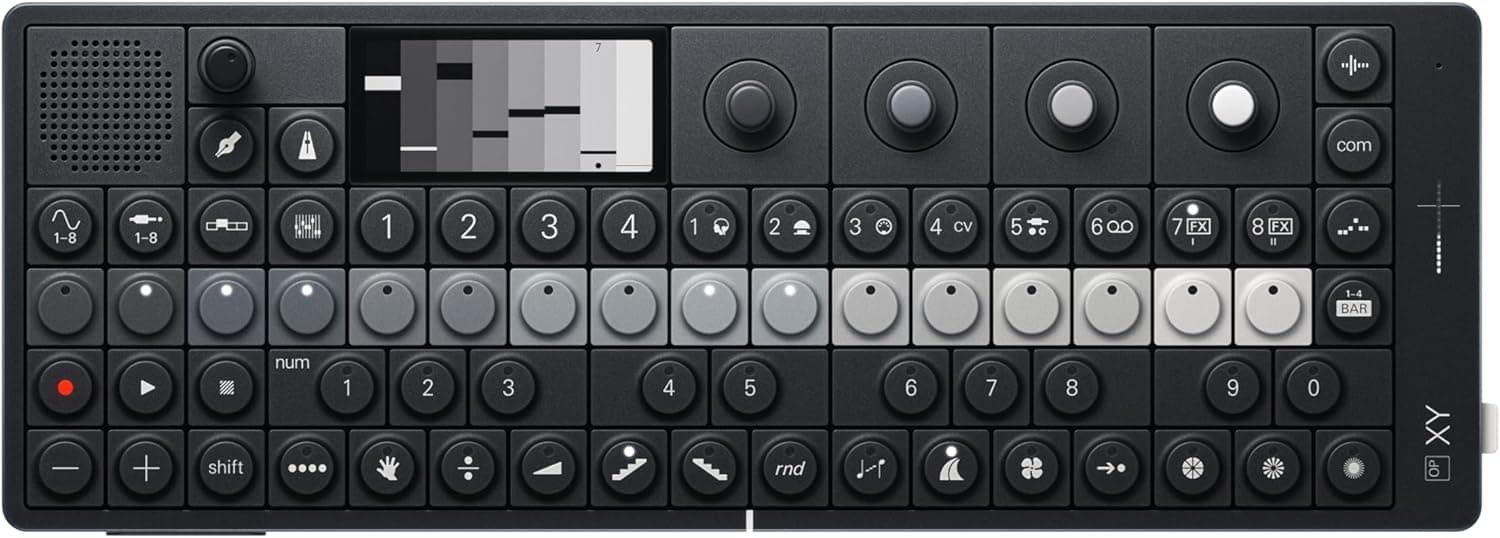
SponsoredSponsored
Key Features:
- ✓Optimized for music production
- ✓Professional-grade quality
- ✓Studio-tested reliability
Excellent choice for music production with SponsoredSponsored quality and proven reliability.
We earn a commission if you make a purchase, at no additional cost to you.
Decoding the Synth-Electronic Music Symbiosis: A Contextual Analysis
The relationship between synthesizers and electronic music is symbiotic, a continuous feedback loop where technological advancements in synthesis techniques inspire new musical forms, which in turn drive further innovation. Early electronic music pioneers like Wendy Carlos and Robert Moog laid the foundation by demonstrating the expressive potential of analog synthesizers, paving the way for genres like synth-pop, techno, and house. These genres, initially defined by their reliance on synthesized sounds, have since evolved and diversified, incorporating elements of acoustic instrumentation and sampling. However, the synthesizer remains a central element, providing the core sonic palette for many electronic music styles.
Modern electronic music demands a diverse range of sonic textures, from the gritty, distorted basslines of dubstep to the ethereal, evolving soundscapes of ambient music. Consequently, the ideal synthesizer for electronic music production is not a single instrument, but rather a collection of tools that offer different sonic characteristics and synthesis methods. Analog synthesizers, with their warm, organic tones, are often favored for creating classic synth sounds and adding character to tracks. Digital synthesizers, on the other hand, excel at producing complex, evolving sounds and offer precise control over parameters. Software synthesizers (VSTs) provide unparalleled flexibility and affordability, allowing producers to experiment with a wide range of sounds without investing in expensive hardware.
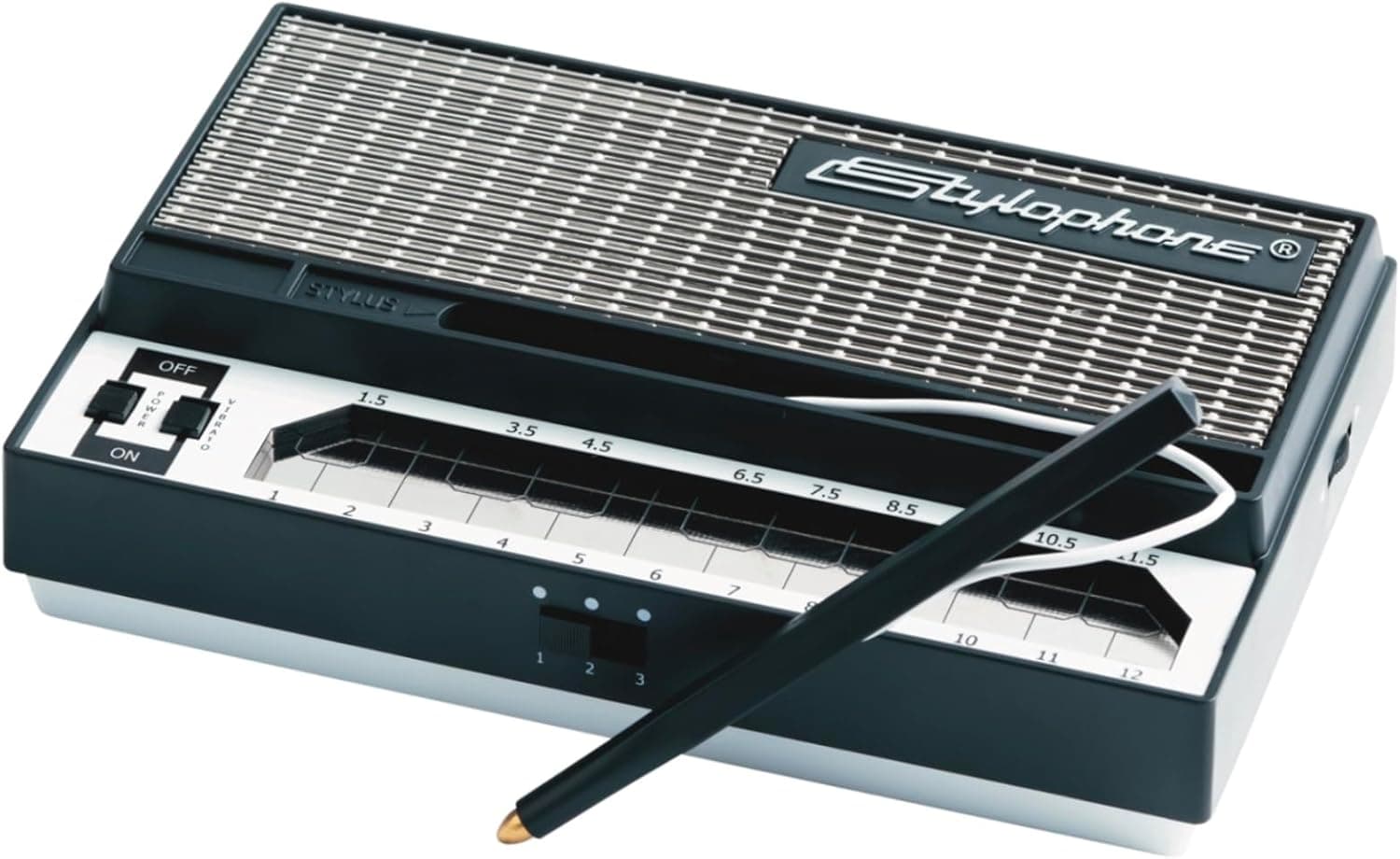
Stylophone The Original Pocket Electronic Synthesizer | Synth Musical Instrument | Synthesizer Keyboard | Stylophone Instrument Synth
Key Features:
- ✓Original pocket electronic synthesizer design
- ✓Iconic analog sound with 3 octaves
- ✓Touch-sensitive metal keyboard
- ✓Stylus-operated interface
- ✓Optional vibrato effect
- ✓Built-in speaker and headphone socket
- ✓Portable battery-powered operation
- ✓Connectivity for recording and performance
Iconic and affordable pocket synthesizer perfect for unique electronic sounds and creative experimentation.
We earn a commission if you make a purchase, at no additional cost to you.
Understanding the nuances of different synthesis methods is crucial for making informed decisions about which synthesizers to acquire. Subtractive synthesis, the most common method, involves filtering harmonically rich waveforms to shape the sound. FM (Frequency Modulation) synthesis, popularized by the Yamaha DX7, allows for the creation of complex, metallic sounds. Wavetable synthesis uses pre-recorded waveforms as the basis for sound generation, offering a wide range of timbral possibilities. Granular synthesis breaks down audio into tiny grains, which can then be manipulated to create textures and soundscapes. Each of these methods has its strengths and weaknesses, and understanding them will allow you to choose the right tool for the job. Furthermore, the integration of effects processors, both hardware and software, plays a vital role in shaping the final sound of a synthesizer. Reverb, delay, chorus, distortion, and other effects can be used to add depth, texture, and character to synthesized sounds, transforming them into unique and compelling elements within an electronic music track.
Synthesizer Selection and Electronic Music Application: Featured Spotlight and Multi-Product Exploration
Selecting the right synthesizer for electronic music production is a deeply personal process, influenced by individual preferences, musical goals, and budget constraints. However, some synthesizers consistently stand out as versatile and powerful tools for creating a wide range of electronic music styles.
Featured Spotlight: A Deep Dive into a Versatile Synth
Consider the Arturia MiniBrute 2S. While not explicitly mentioned in the provided products, it serves as an excellent example of a modern analog synthesizer that caters to the needs of electronic music producers. The MiniBrute 2S combines a powerful analog sound engine with a versatile sequencer and extensive modulation capabilities. Its Steiner-Parker multimode filter offers a unique character, capable of producing both smooth and aggressive tones. The sequencer allows for the creation of complex rhythmic patterns and melodic lines, while the modulation matrix provides extensive control over parameters, enabling the creation of evolving and dynamic sounds. For electronic music producers, the MiniBrute 2S offers a hands-on, tactile experience that encourages experimentation and sonic exploration. Its semi-modular design allows for integration with other synthesizers and modular gear, expanding its sonic possibilities even further. The ability to sync its sequencer to external devices makes it a valuable tool for live performance and studio production.
Multi-Product Section: Exploring Options and Features
Let's consider how the provided Amazon products might fit into an electronic music production workflow. While the details are limited, we can extrapolate based on typical product categories.
The "Amazon's Choice: Overall Pick," priced at $39.00, likely represents an entry-level accessory or tool. It could be something like a MIDI cable, a headphone adapter, or a small utility device. For a beginner electronic music producer, such an item is essential for connecting equipment and getting started. It highlights the importance of not overlooking the fundamental accessories needed to build a functional studio setup. These items are often the unsung heroes of the production process, ensuring seamless connectivity and reliable performance.
The "Professional Synthesizer," priced at $2299.00 with a rating of 3.8, suggests a higher-end piece of equipment, possibly a synthesizer, a high-end audio interface, or a studio monitor. The relatively low rating suggests that while it might offer advanced features, it may also have some drawbacks or limitations that users have experienced. When considering a product in this price range, it's crucial to research user reviews and compare it to alternative options to ensure it meets your specific needs and expectations. For example, if it's a synthesizer, consider its synthesis method, modulation capabilities, and overall sound character. If it's an audio interface, evaluate its preamps, converters, and latency performance. The high price point warrants careful consideration and thorough research.
Application Insights: Real-World Electronic Production Scenarios
To illustrate how these synthesizers can be used in real-world electronic music production scenarios, let's consider a few examples.
Imagine you're producing a techno track and need a driving bassline. The MiniBrute 2S (as discussed earlier) could be used to create a raw, distorted bass sound by using its Steiner-Parker filter in high-pass mode and adding some overdrive. The sequencer could be used to create a rhythmic pattern, and the modulation matrix could be used to add subtle variations to the sound over time. The $39 "Amazon's Choice" item, perhaps a MIDI cable, would be essential for syncing the MiniBrute 2S to your DAW and other MIDI-enabled devices.
Alternatively, if you're working on an ambient track and need to create evolving soundscapes, a wavetable synthesizer like the Serum (not directly mentioned but a relevant example) could be used to generate complex, textural sounds. The LFOs and envelopes could be used to modulate various parameters, creating slowly changing sonic landscapes. The $2299 "Professional Synthesizer" item, potentially a high-end audio interface, would ensure that the subtle nuances of the ambient soundscapes are captured with pristine clarity.
These examples demonstrate how different synthesizers can be used to create a wide range of sounds for electronic music production. The key is to understand the strengths and weaknesses of each instrument and to use them in a way that complements the overall aesthetic of the track.
Contextual Buying Guidance: Strategic Investment for Electronic Precision
The synthesizer market can be overwhelming, especially for beginners. Here's buying guidance tailored specifically for electronic music producers at different experience levels:
Beginner Electronic Producers
- Start with versatile and affordable software synthesizers (VSTs)
- Focus on learning synthesis fundamentals and experimenting with different sounds
- Choose excellent free and low-cost options available with wide ranges of sounds and features
- Invest in essential accessories like MIDI interfaces for connectivity
Intermediate Electronic Producers
- Consider investing in hardware synthesizers that complement existing software instruments
- Explore semi-modular analog synthesizers for hands-on experience and experimentation
- Focus on learning advanced programming techniques and workflow integration
- Build specialized skills in specific synthesis methods
Advanced Electronic Producers
- Explore specialized synthesizers that cater to specific musical interests
- Consider modular synthesizers, vintage instruments, or high-end digital models
- Focus on mastering advanced synthesis techniques and creating unique, innovative sounds
- Invest in professional-grade instruments that offer features essential to your creative process
Timing and Research Considerations: Many manufacturers release new synthesizers throughout the year, so it's worth keeping an eye on industry news and product announcements. Black Friday and other holiday sales can provide opportunities to save money on synthesizers and music production equipment. Always research thoroughly and read reviews before making any purchase.
Conclusion
The synthesizer remains an indispensable tool for electronic music producers, offering a vast palette of sonic possibilities and inspiring endless creative exploration. By understanding different synthesis methods, carefully selecting the right instruments, and mastering advanced production techniques, you can unlock your full potential and create truly unique and compelling electronic music.
The journey of synthesizer exploration is a continuous process of learning, experimentation, and sonic discovery. Embrace the challenge, stay curious, and let your creativity guide you toward the high-performance electronic precision that defines professional productions.